Donate
 Contact Us

 Careers
 Pay a Bill
 Schedule
 MyChart
 Donate
 Contact Us
Stroke Awareness Month: Prompt emergency care saves 28-year-old Fargo resident
May 15, 2026 By: Caitlin Pallai
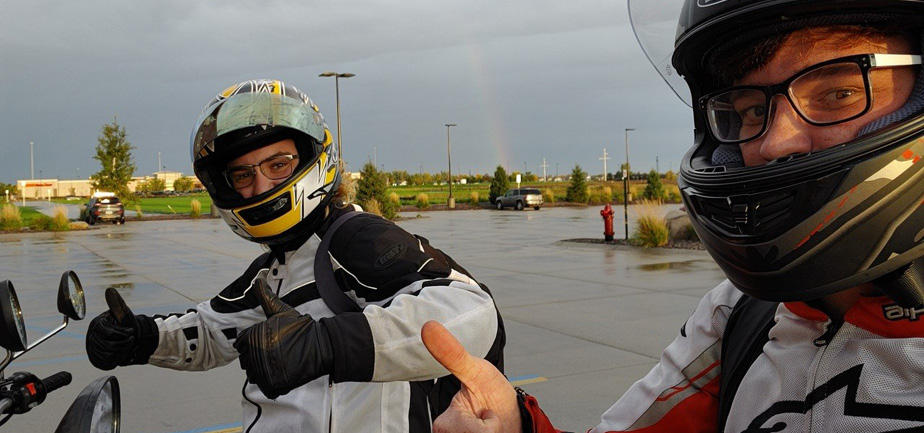
Alex Pierce assumed he was having a bad headache. But when he began vomiting and struggled to stand, the 28-year-old Fargo resident knew something wasn't right.
Pierce's partner, Trevor, jumped into action and took him to the emergency department at Essentia Health-Fargo, where he was quickly admitted on Sept. 28, 2025.
A computed tomography (CT) scan confirmed Pierce was having a subarachnoid hemorrhage, a type of stroke where there is bleeding between the brain and surrounding tissues.
"My initial reaction was disbelief," Pierce said. "There's no way this could happen to me."
Dr. Madhu Vijayappa, an interventional neurologist at Essentia, performed a cerebral angiogram to determine the source of Pierce’s bleeding. Results identified two small blister aneurysms on his left and right carotid arteries, major blood vessels in the neck.
Because blister aneurysms differ from the more common berry-shaped aneurysms, they can be more difficult to detect and treat.
Blister aneurysms are treated using flow diverters, a type of stent that redirects blood away from the aneurysm, reducing pressure and allowing the artery to heal over time.
"Patients like Alex often need to be treated first to reduce their bleeding risk, so the timing of treatment requires careful coordination and monitoring," explained Megan Carlblom, a nurse practitioner in interventional neurology at Essentia and another of Pierce's clinicians.
Two flow diverters were successfully placed on Oct. 2.
During his recovery, Pierce experienced one of the most common and serious complications for subarachnoid hemorrhage – vasospasm.
"The blood irritates the brain tissue, causing blood vessels to clamp down and restrict oxygen," Carlblom said. "This can trigger an ischemic stroke."
Because vasospasm risk is greatest several days after the initial hemorrhage, Pierce was closely monitored in the intensive care unit for three weeks until his condition stabilized.
He appreciates how thoughtful and attentive everyone was and credits one of his nurses, Jennifer, for keeping him "semi-sane" during his longer hospital stay.
"She was fantastic," he said.
Thanks to the prompt care he received at Essentia, Pierce walked away from a life-threatening condition. He hopes others learn from his story and remember to act fast when faced with stroke symptoms.
"You know your body better than anyone else," he said. "If you think something is wrong, definitely go get it checked out."

Knowing the signs of stroke
While stroke is often associated with older adults, Alex's story is a reminder that a stroke can happen at any age and symptoms should not be ignored. Warning signs such as a sudden severe headache, vomiting, vision changes, trouble walking, weakness or speech changes should prompt immediate medical attention.
Use the acronym "BEFAST" to spot common signs:
- Balance: Does the person have sudden loss of balance?
- Eyes: Has the person lost vision in one or both eyes?
- Face: Smile. Does a side of the face droop?
- Arms: Raise both arms. Does one drift downward?
- Speech: Repeat a simple phrase. Is speech slurred or strange?
- Time: If you observe any of these signs, it’s time to call 911 right away.
T also stands for "terrible headache," which is what Pierce experienced. Called a thunderclap headache, it is intense and comes on suddenly.
WATCH: In this video, stroke program manager Chelsey Kuznia talks about the signs of stroke and the acronym BEFAST on North Dakota Today.
Certain conditions can also increase your risk for stroke, which, for Pierce, included his polycystic kidney disease (PKD). A genetic disorder impacting the kidneys, PKD can also impact the structural components of blood vessels, weakening them.
Pierce was more prone to developing weakened vessels and, combined with his higher blood pressure, the result was "a bit of a perfect storm," according to Carlblom.
Untreated high blood pressure is the No. 1 modifiable risk factor for stroke, so it's important to know your numbers. Learn your risk for stroke by reviewing the American Stroke Association's Stroke Risk Scorecard. Share the results with your primary care provider.
Learn more about Essentia's stroke care at EssentiaHealth.org.