Donate
 Contact Us

 Careers
 Pay a Bill
 Schedule
 MyChart
 Donate
 Contact Us
How Essentia Health-St. Joseph’s Medical Center is saving more lives in the Brainerd Lakes Area
February 13, 2026 By: Anthony Matt
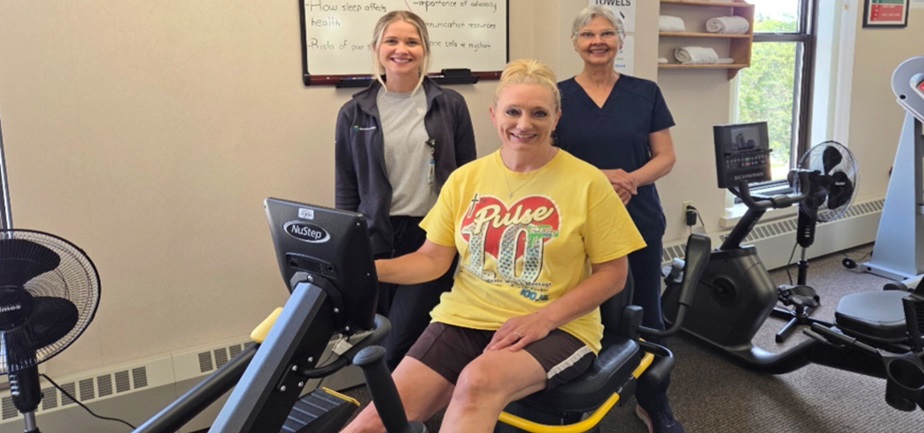
Timely cardiology care is something 55-year-old Brainerd resident Michele Albright is especially thankful for.
On the morning of June 21, 2025, Michele woke at about 5 a.m. with sever chest pain, alternating hot and cold flashes and the worst chest pain she'd ever felt. Recognizing the emergency, she told her husband, who rushed her to Essentia Health-St. Joseph’s Medical Center.
Albright was having a heart attack. Once she arrived at St. Joseph’s, a team at the Marilyn Covey Heart and Vascular Center sprang into action.
“One of my coronary arteries was completely blocked,” said Albright.
She was having an acute ST-elevation myocardial infarction (STEMI), the most severe type of heart attack, which has a greater risk of serious complications and death and needs timely intervention to save heart muscle.
Because St. Joseph’s offers 24/7 STEMI care, a team of highly trained health care workers, led by cardiologist Dr. Michael Curran, went to work. In less than two hours, Albright was out of surgery with a stent placed to allow blood to flow freely in her blocked artery.
“It was very, very scary,” said Albright. “It was literally a wakeup call for me, and I thank God every day that I’m alive.”
According to the American Heart Association, about 30% of patients suffering from a STEMI either do not receive timely treatment or don’t receive any treatment, often due to the lack of a nearby STEMI receiving center. Essentia hopes to reduce that number by providing access to this life-saving care in the Brainerd Lakes Area.
“It was awesome to have this resource in my community,” said Albright. “I was really thankful to have this here because, with this blockage, time was extremely valuable. It might have been a different story if this wasn’t here.”
“In a rural community like Brainerd, people often think that the best care is only available in big cities,” said Dr. Curran. “But at Essentia, we’ve built something special: a highly talented team of specialists who deliver world-class heart care right where people live.”
“When Michele arrived with a 100% blocked artery, our team moved with speed and precision because we know every minute counts, and we know our patients deserve the same expertise they’d receive anywhere else. Providing this level of care in a rural setting isn’t just possible; it’s what we do every day, and it saves lives.”
Now, about eight months later, Albright, a fifth-grade teacher at Forestview Middle School, is back and better than ever. With the help of Essentia’s cardiac rehab team, she’s learned to eat healthier, manage her risk factors, lose 40 pounds and achieve better overall health and wellness.
“My new hobbies include learning how to cook more meals that promote healthier living, as well as learn the importance of routine exercise to manage my heart health,” she said. “Many of my relatives have heart issues. Now, several have taken this as a sign to get healthy and manage their lifestyles.”
On Feb. 12, Albright will be attending the first ever women’s heart health support group at the Marilyn Covey Heart and Vascular Center.
“I had a wonderful experience at Essentia, and I’m forever grateful for the medical staff there,” she says.
According to the Minnesota Department of Health, each year about 3,000 Minnesotans suffer a STEMI and need immediate emergency care.
You should see your primary care physician if you have a family history of heart disease or if you experience any of the following symptoms:
- Dizzy spells.
- Shortness of breath.
- Chest pain.
Your doctor may refer you to a heart specialist for further testing and treatment. If you experience frequent or severe chest pain, shortness of breath, or nausea, get medical attention immediately.
Symptoms
Some heart attack symptoms can be different between men and women. Why does it matter? Women may be less likely to seek immediate medical care, which can cause more damage to the heart.
- Men feel pain and numbness in the left arm or side of chest, but in women, these symptoms may appear on the right side.
- Women may feel completely exhausted, drained, dizzy or nauseous.
- Women may feel upper back pain that travels up into their jaw.
- Women may think their stomach pain is the flu, heartburn or an ulcer.
- Feeling of fullness.
- Pain that travels down one or both arms.
- Excessive fatigue or weakness.
- Anxiety.
In some instances, the signs and symptoms are different. The patient may not complain about pain or pressure in the chest. Be alert for the following:
- A sharp or “knife-like” pain that occurs with coughing or breathing.
- Pain that spreads above the jawbone or into the lower body.
- Difficult or labored breathing.
General risk factors
Become more aware of the general risk factors that you can discuss with your provider:
- Chest pain, pressure, burning, aching or tightness — it may come and go.
- A family history of cardiovascular disease.
- High blood pressure.
- Overweight or obese.
- Sedentary lifestyle.
- Using tobacco products.
- Metabolic disease, diabetes or other illnesses.
- Taking certain birth control pills, a history of pre-eclampsia, gestational diabetes or having a low-birth-weight baby.